
Hey there! As a supplier of Garlic In Brine, I often get asked about the color change of garlic when it's in brine. It's a fascinating topic, and I'm excited to share some insights with you.
First off, let's talk about what brine is. Brine is basically a saltwater solution. When we put garlic in brine, we're not just preserving it, but we're also setting off a series of chemical and biological reactions that can affect its color.
Factors Influencing Color Change
1. Enzymatic Reactions
Garlic contains enzymes, and one of the key ones is alliinase. When garlic is cut or crushed and then placed in brine, alliinase starts to break down alliin, a sulfur - containing compound. This breakdown leads to the formation of various sulfur - based compounds. Some of these compounds can react with other substances in the garlic or the brine, causing a color change. For example, the formation of certain sulfur - nitrogen compounds can result in a yellowish or even greenish tint.
2. pH of the Brine
The pH level of the brine plays a huge role. If the brine is acidic, it can promote different chemical reactions compared to a more alkaline brine. A slightly acidic brine might help in preserving the natural white color of the garlic for a longer time. On the other hand, a more alkaline brine can speed up the formation of colored compounds. We usually try to maintain a specific pH in our brine to get the best color and quality for Peeled Garlic Cloves in Brine.


3. Storage Conditions
Temperature and light also matter. Garlic in brine should be stored in a cool, dark place. If it's exposed to high temperatures, the reaction rates increase, and the color can change more rapidly. Light can also have a similar effect, especially sunlight. Ultraviolet rays in sunlight can trigger oxidation reactions in the garlic, leading to a darker or discolored appearance.
Stages of Color Change
Initial Stage
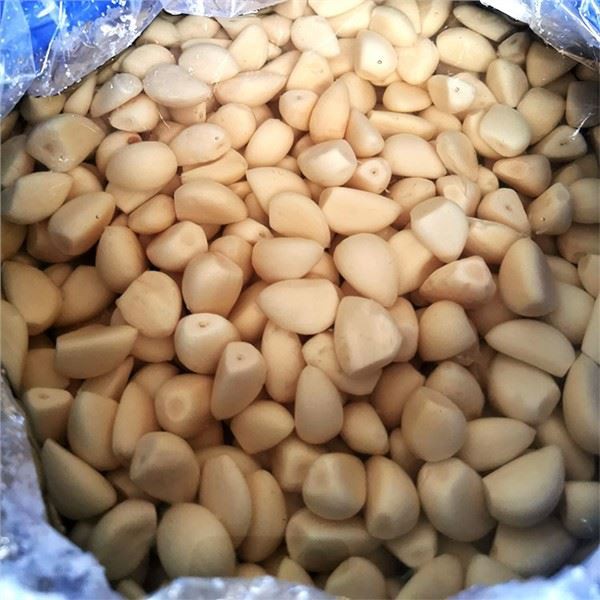
When fresh garlic cloves are first placed in brine, they usually retain their natural white color. This is because the chemical reactions are just starting, and the enzymes and compounds in the garlic haven't had enough time to interact significantly. At this point, the garlic looks just like it did when it was fresh, but it's starting to be preserved by the brine.
Intermediate Stage
After a few days to a couple of weeks, depending on the factors mentioned above, you might notice a slight change in color. The garlic could start to take on a pale yellow or light green hue. This is a sign that the enzymatic and chemical reactions are progressing. The sulfur - based compounds are forming and interacting with other substances in the garlic and brine.
Final Stage
Over a longer period, say a few months, the garlic can become more noticeably colored. It might turn a deeper yellow or even a greenish - blue color in some cases. This doesn't necessarily mean the garlic is bad. In fact, it can still be perfectly edible and flavorful. But for some customers, the color might be a bit off - putting. That's why we pay such close attention to the brine conditions to keep the color as appealing as possible in our Preserved Garlic In Brine In Drums.
Our Approach as a Supplier
We've spent a lot of time experimenting with different brine recipes and storage methods to control the color change of our garlic. We use high - quality salt and carefully monitor the pH of the brine. We also store our Garlic in Brine in 25kg Drum in large warehouses with controlled temperature and light conditions.
This way, we can offer our customers garlic in brine that has a consistent and appealing color. Whether it's for restaurants that want to use it in their dishes or for food manufacturers who incorporate it into their products, we want our garlic to look as good as it tastes.
Why Color Matters
You might be wondering, "Why does the color of garlic in brine matter so much?" Well, first of all, appearance is a big part of food. Consumers are more likely to buy a product that looks fresh and appealing. If the garlic has an unnatural or unappealing color, it might make them think the product is old or of poor quality, even if the taste is just fine.
For restaurants and food businesses, the color also affects the presentation of the final dish. A light - colored, fresh - looking garlic in brine can enhance the overall look of a salad, a pasta dish, or a sauce.
Conclusion
In conclusion, the color change of garlic in brine is a complex process influenced by enzymatic reactions, the pH of the brine, and storage conditions. As a supplier, we're constantly working to understand and control these factors to provide the best - looking and best - tasting garlic in brine to our customers.
If you're interested in purchasing our garlic in brine, whether it's for your restaurant, food business, or personal use, we'd love to talk to you. Just reach out and we can discuss the details and get you the product you need.
References
- Fennema, O. R. (1996). Food Chemistry. Marcel Dekker.
- Shaw, P. E. (Ed.). (2008). Flavor Chemistry. Wiley - Blackwell.