
If you’ve ever walked through a grocery store’s canned goods aisle, you’ve probably seen preserved mushrooms lining the shelves — and if you’re a chef, home cook, or food business owner, you know these shelf-stable fungi are a workhorse for everything from pasta sauces and pizzas to charcuterie boards and vegan gravies. But have you ever stopped to wonder: how do mushrooms, which are 80-90% water and spoil in just a few days when fresh, get turned into a product that lasts months (even years) without losing too much of their flavor, texture, or nutrition? As a supplier that’s spent years perfecting mushroom preservation methods, I’ve learned that the right technique isn’t just about extending shelf life — it’s about retaining the earthy, umami depth that makes mushrooms so beloved. Let’s break down the most common, science-backed preservation methods, and how we use them to bring high-quality preserved mushrooms to your table.
First, let’s start with why mushrooms are such a tricky ingredient to preserve. Unlike other produce, mushrooms don’t have a protective skin to block moisture, bacteria, and mold. Their high water content, combined with a neutral pH and nutrient-dense flesh, makes them a perfect breeding ground for spoilage organisms: bacteria like Pseudomonas that cause sliminess, and molds like Penicillium that leave fuzzy patches. Preservation works by eliminating or inhibiting these organisms, or by creating an environment where they can’t survive. That’s why every method targets one of three goals: removing moisture, lowering pH, or adding natural or chemical preservatives that fight spoilage.
Sulfur Dioxide (SO2) Preservation: The Gold Standard for Color and Shelf Life
One of the most widely used methods for preserved mushrooms, especially when keeping their bright, natural color matters, is sulfur dioxide treatment. Sulfur dioxide acts as a preservative, antimicrobial agent, and antioxidant all in one — and it’s been approved for use in food for decades by organizations like the FDA and EFSA, when used within safe limits.
Here’s how it works: Mushrooms are washed, sorted, and blanched briefly (usually in hot water) to kill surface enzymes that would cause browning, then immersed in a solution that contains sulfur dioxide (often as sodium metabisulfite, which releases SO2 when dissolved). The SO2 penetrates the mushroom’s flesh, killing spoilage bacteria and mold, and preventing enzymatic browning that turns mushrooms from creamy white to dull gray over time. It also stops oxidation, which preserves the umami compounds (like glutamic acid) that give mushrooms their rich flavor.
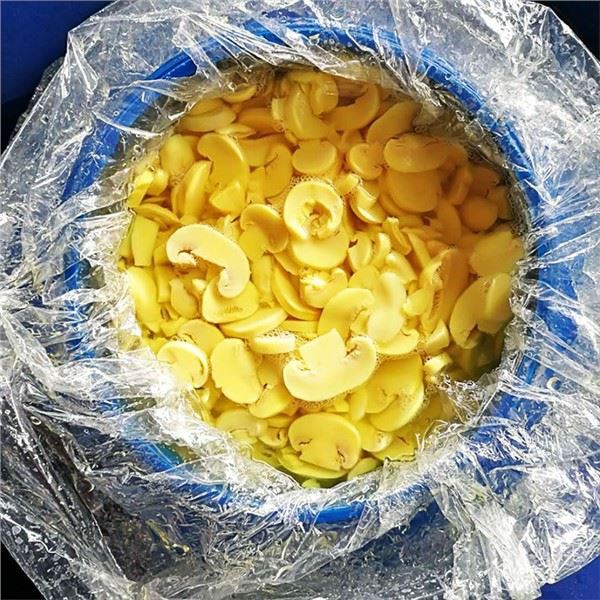
At our company, we use SO2 preservation for a range of products tailored to different needs. For example, our Mushroom Cogumelos in SO2 are ideal for commercial food manufacturers who need a consistent, long-lasting ingredient for sauces and ready meals — the SO2 keeps them fresh for up to 2 years, and the small dose we use means the final product has no off-flavors. We also offer Chinese Champignon in SO2 in Barrel, which is bulk-packed for restaurants and distributors, giving them cost-effective, shelf-stable mushrooms that are easy to portion. For customers who prefer whole mushrooms for plating or salads, our 4-5cm Fresh Whole Mushroom In SO2 retain their shape perfectly, so they look as good as they taste.
It’s important to note that SO2 is not for everyone — a small percentage of people with asthma or sulfite sensitivities need to avoid products with added sulfites. That’s why we clearly label all our SO2-preserved products, and offer alternative methods for customers who need sulfite-free options.
Brining (Salting): A Traditional, No-Additive Preservation Method
If SO2 isn’t an option, brining is a centuries-old preservation technique that’s still popular today, especially for products that will be used in dishes where salt enhances flavor. Brining works on the principle of osmosis: a high concentration of salt in a solution draws moisture out of the mushrooms, creating an environment where bacteria can’t survive.
The process starts with sorting fresh mushrooms, removing stems if needed, and packing them into food-grade barrels or tanks. A brine solution (usually 10-15% salt, with some added citric acid to adjust pH) is poured over the mushrooms, ensuring they’re fully submerged — any mushroom left above the brine will spoil quickly. The mushrooms are then stored in a cool, dark place (around 10-15°C / 50-59°F) for several weeks to months, during which the salt penetrates the flesh, killing spoilage organisms and preserving the mushrooms.
Brined mushrooms have a firm, slightly salty texture, and a deep, earthy flavor that works great in cured meats, pickles, or Mediterranean dishes. We offer our Brine Mushrooms as a sulfite-free option, perfect for customers who need to avoid sulfites but still want a long-lasting preserved mushroom. The brine also adds a versatile flavor boost, so you can use them straight from the pack or rinse them lightly to reduce salt for milder dishes.
Dehydration: The Oldest Method, Reimagined for Modern Use
Dehydration is one of the oldest ways to preserve food, and it’s still a popular choice for mushrooms because it creates a lightweight, shelf-stable product that’s easy to store and transport. Dehydration works by removing almost all moisture from the mushrooms — less than 10% water content — which makes it impossible for bacteria, mold, or yeast to grow.
Modern mushroom dehydration is a controlled process: fresh mushrooms are washed, sliced or left whole, and spread on trays in a dehydrator that maintains a low temperature (between 50-60°C / 122-140°F) for several hours. This slow, low-temperature drying preserves the mushroom’s nutrients and flavor, without cooking it all the way through. The result is a dry, crisp mushroom that can be stored in an airtight container for up to a year, and rehydrated in water or broth in just 15-20 minutes.
Dehydrated mushrooms are great for stocks, soups, and vegan broths, as they rehydrate quickly and add a rich umami flavor. However, they can’t be used in dishes where a fresh-like texture is required — they’re best when softened in liquid. While our company focuses on moist preserved mushrooms (like brined or SO2-preserved), we work with partners who specialize in high-quality dehydrated mushrooms to offer a full range of options.
Other Methods: Canning, Freezing, and Fermentation
Beyond the big three (SO2, brining, dehydration), there are a few other preservation methods used for mushrooms, each with their own pros and cons. Canning is similar to the process used for many vegetables: mushrooms are packed into jars with a liquid (usually water, broth, or brine), sealed, and heated to a high temperature to kill spoilage organisms and create a vacuum seal. Canned mushrooms have a shelf life of 1-2 years, and retain their texture well, though the heat processing can dull some of their fresh flavor.
Freezing is another simple method, but it’s only for short-term preservation (up to 6 months). Fresh mushrooms are blanched first to stop enzymatic browning, then frozen in airtight bags. Freezing can cause the mushroom’s cells to break down, so they’re best used in cooked dishes — they’re not ideal for raw preparations like salads.
Fermentation is a newer, trendier method that’s gaining popularity for artisanal preserved mushrooms. Fermentation uses beneficial bacteria (like lactic acid bacteria) to break down the mushroom’s sugars, creating lactic acid which lowers the pH and preserves the mushrooms. Fermented mushrooms have a tangy, umami flavor, similar to sauerkraut or kimchi, and are rich in probiotics. They’re perfect for charcuterie boards, grain bowls, or as a side dish, though they have a shorter shelf life (around 3-6 months) than brined or SO2-preserved mushrooms.
Choosing the Right Preservation Method for Your Needs
As a preserved mushroom supplier, I can’t stress enough that there’s no one “best” method — it all depends on what you’re using the mushrooms for. If you’re a restaurant serving salads or plating dishes where whole mushrooms look attractive, our SO2-preserved options like Preserved Mushroom in SO2 are ideal, as they retain their shape and color. If you’re a food manufacturer making sauces or ready meals where sulfites aren’t an option, our brined mushrooms offer a sulfite-free alternative with great flavor. If you’re a home cook making stocks or soups, dehydrated mushrooms are a cost-effective, lightweight choice.
Each method has its own trade-offs: SO2 gives a long shelf life and bright color, but requires labeling for sulfites; brining is sulfite-free, but adds salt; dehydration is lightweight, but requires rehydration. The key is balancing your needs for shelf life, flavor, texture, and dietary restrictions.
At the end of the day, the goal of any preservation method is to make mushrooms accessible year-round, without sacrificing the qualities that make them special. For small businesses and home cooks, preserved mushrooms take the stress out of having to use fresh mushrooms before they spoil — and for our team, that’s what it’s all about: turning a perishable, seasonal ingredient into a reliable, versatile staple.


If you’re looking for high-quality preserved mushrooms tailored to your business or personal use, we offer a full range of options, from bulk barrels for restaurants to retail-ready packs for home cooks. Whether you’re interested in SO2-preserved products, sulfite-free brined mushrooms, or other options, we’re here to help you find the right fit. Get in touch to discuss your needs and place an order.
References
- U.S. Food and Drug Administration. (2023). Food Additives Permitted for Direct Addition to Food for Human Consumption: Sulfur Dioxide. Retrieved from fda.gov
- European Food Safety Authority. (2022). Scientific Opinion on the re-evaluation of sulfur dioxide (E 220), sodium sulfite (E 221), sodium bisulfite (E 222), sodium metabisulfite (E 223), potassium metabisulfite (E 224), calcium sulfite (E 226), calcium bisulfite (E 227) and potassium bisulfite (E 228) as food additives. EFSA Journal, 20(10), 7567.
- Fellows, P. (2020). Food Processing Technology: Principles and Practice (4th ed.). Woodhead Publishing.
- Lamikanra, O. (Ed.). (2019). Fresh-Cut Fruits and Vegetables: Science, Technology, and Safety (2nd ed.). CRC Press.
- Zhang, Y., et al. (2021). Preservation of mushrooms: Recent advances, challenges, and opportunities. Journal of Food Science and Technology, 58(12), 4521-4532.